The STMicroelectronics STM32F030C6T6 is a 32-bit microcontroller based on the Arm Cortex-M0 core, operating at up to 48 MHz. It features 32 KB Flash, 4 KB SRAM, and integrates peripherals like USART, SPI, I2C, a 12-bit ADC, and multiple timers. With low-power modes (Sleep/Stop/Standby) and a 2.4–3.6 V supply range, it suits battery-powered devices. Housed in an LQFP48 package, it’s ideal for cost-sensitive applications such as consumer electronics, smart home devices, and basic industrial controls, offering a balance of performance and energy efficiency.
STMicroelectronics STM32F030C6T6's Features
STM32F030C6T6 is a 32-bit microcontroller based on the Arm Cortex-M0 core introduced by STMicroelectronics, belonging to the STM32F030x6 series. It is suitable for low-power and medium-performance embedded applications. The following are its main functional features:
1. Core and Processing Capability
- CPU: Equipped with an Arm Cortex-M0 32-bit RISC core, with a maximum main frequency of 48 MHz. It supports low-power design and is suitable for real-time control and data processing.
- Instruction Set: Thumb instruction set, with high code efficiency, compatible with Arm toolchains and software ecosystems.
2. Memory Configuration
- Flash Memory: 32 KB for program and data storage, supporting read-write protection and encryption functions.
- SRAM: 8 KB, supporting hardware parity check to ensure data integrity.
3. Peripherals and Interfaces
Timers and Counters
- Advanced Control Timer (TIM1): 16-bit timer, supporting 6-channel PWM output, complementary waveform generation, and dead-time control, suitable for complex control scenarios such as motor driving.
- General Timers (TIM3, TIM14, etc.): A total of 5 16-bit timers, supporting input capture, output comparison, PWM generation, and quadrature encoder interface, suitable for timing, counting, and pulse measurement.
- Basic Timer (TIM6): 16-bit timer for simple timing or delay functions.
- Watchdog Timers: Independent Watchdog (IWDG) and System Window Watchdog (WWDG) to improve system reliability.
Communication Interfaces
- USART: 2 USARTs, supporting synchronous mode (SPI master), automatic baud rate detection, and modem control, with a maximum rate of 6 Mbit/s.
- SPI: 1 SPI interface, supporting master/slave modes, with a maximum rate of 18 Mbit/s, compatible with 4-16 bit data frames.
- I²C: 1 I²C interface, supporting standard mode (100 kbit/s), fast mode (400 kbit/s), and fast mode plus (1 Mbit/s), compatible with SMBus/PMBus.
- Serial Debug Interface: SWD (Serial Wire Debug), supporting on-chip debugging and programming.
Analog Peripherals
- ADC: 12-bit successive approximation ADC, supporting 10 external channels + 2 internal channels (temperature sensor, internal voltage reference), with a minimum conversion time of 1 μs, supporting scan mode and DMA transmission.
- Temperature Sensor: Integrated temperature sensor, with output voltage linearly related to temperature, requiring calibration to improve accuracy.
- Internal Voltage Reference (VREFINT): Provides a stable bandgap voltage for ADC calibration.
Other Peripherals
- DMA Controller: 5-channel general DMA, supporting data transmission from memory to memory and peripheral to memory, reducing CPU load.
- CRC Calculation Unit: Cyclic Redundancy Check for data transmission or storage integrity verification.
- RTC (Real-Time Clock): Supports calendar functions (year/month/day/hour/minute/second), alarms, and periodic wake-up, compatible with 32.768 kHz external crystal.
4. Power Supply and Low Power Consumption
- Power Supply Voltage:
- Digital Power (VDD): 2.4–3.6 V.
- Analog Power (VDDA): Same as or higher than VDD (≥ VDD), 2.4–3.6 V.
- Low-Power Modes:
- Sleep Mode: CPU stops, peripherals continue to run, and can be woken up by interrupts.
- Stop Mode: All clocks stop, SRAM and register contents are retained, with extremely low power consumption (typical value 5 μA @ 3.6 V).
- Standby Mode: Power regulator is off, with the lowest power consumption (typical value 2 μA @ 3.6 V), requiring external reset or RTC event to wake up.
- Power Management: Integrated Power-On Reset (POR) and Power-Down Reset (PDR) to ensure startup when the power supply is stable.
5. Clock Management
- External Clocks:
- HSE (High-Speed External): 4–32 MHz crystal/ceramic resonator.
- LSE (Low-Speed External): 32.768 kHz crystal for RTC.
- Internal Clocks:
- HSI (High-Speed Internal): 8 MHz RC oscillator, which can be frequency-multiplied to up to 48 MHz via PLL.
- LSI (Low-Speed Internal): 40 kHz RC oscillator for independent watchdog and low-power timer.
- PLL (Phase-Locked Loop): Supports HSI or HSE input, with a frequency multiplication factor of 2–16 to generate System Clock (SYSCLK).
6. GPIO and Packaging
- GPIO Features:
- 39 general-purpose I/O pins, supporting 5V tolerance (FT type), configurable as input, output (push-pull/open-drain), or peripheral multiplexing functions.
- All pins support external interrupts, which can be mapped to 16 interrupt vectors.
- Package: LQFP48 (7x7 mm), with a pin pitch of 0.5 mm, suitable for compact designs.
7. Environment and Reliability
- Temperature Range: -40°C to +85°C (industrial grade).
- ESD Protection: Complies with JESD22 standards, Human Body Model (HBM) ±2000 V, Charged Device Model (CDM) ±500 V (Class C4).
- EMC/EMI Characteristics: Passed electromagnetic compatibility tests, supporting anti-interference design.
STMicroelectronics STM32F030C6T6's Applications
1. Consumer Electronics and Smart Home
- Home Appliance Control: Serves as the main control module for smart appliances (e.g., air conditioners, washing machines, microwaves). Connects to sensors (temperature, humidity) and display modules (LCD/LED) via USART/I²C/SPI communication interfaces to monitor device status and enable user interaction.
- Smart Home Devices: Used in smart sockets, thermostats, and environmental monitoring nodes. Leverages low-power modes (Sleep/Stop/Standby) to extend battery life, supports ADC acquisition for environmental data (e.g., light, gas concentration), and transmits data via wireless modules (e.g., Bluetooth).
- Handheld Devices: Suitable for electronic scales, portable health monitoring devices, etc., thanks to its compact LQFP48 package and low-power design, meeting portability and battery life requirements.
2. Industrial Automation and Control
- Industrial Sensor Nodes: Acts as a terminal node in distributed sensor networks. Uses timers (TIM1/TIM3) for precise pulse counting or PWM output to control solenoid valves or motors, while efficiently processing sensor data (e.g., encoder signals) via the DMA controller.
- Small PLCs (Programmable Logic Controllers): Supports general-purpose GPIOs and external interrupts for industrial logic control and device status monitoring. Works with watchdog timers (IWDG/WWDG) to enhance system reliability.
- Inverters and Motor Control: Generates PWM waveforms to drive motors via the advanced control timer (TIM1), supporting dead-time control and complementary outputs for small motor speed regulation systems.
3. Medical and Healthcare Devices
- Portable Medical Instruments: Used in blood pressure monitors, blood glucose meters, etc., to accurately acquire physiological signals (e.g., voltage, current) via the 12-bit ADC, combined with low-power modes for long standby times.
- Medical Monitoring Devices: Records data timestamps via the RTC real-time clock and supports SPI interfaces to connect external storage chips (e.g., EEPROM) for historical data storage.
4. Communications and Peripherals
- PC Peripherals: Functions as a USB-to-serial adapter, printer controller, etc., enabling efficient data interaction with hosts via USART auto-baud rate detection and high-speed SPI communication.
- IoT Gateway Edge Nodes: Serves as a lightweight gateway, connecting to sensors (e.g., humidity sensors) via I²C interfaces and wireless modules (e.g., Wi-Fi modules) via UART for data relay.
5. Automotive Electronics and In-Vehicle Aids
- In-Vehicle Sensor Interfaces: Used in automotive subsystems (e.g., tire pressure monitoring, in-cabin environment control). Utilizes 5V-tolerant GPIOs to directly connect to automotive electrical systems, supports temperature sensors to monitor in-cabin temperature, and ensures data transmission reliability via the CRC check unit.
- In-Vehicle Peripheral Control: Controls fan speed or LED lighting via PWM outputs and reduces standby power consumption via low-power modes.
6. Education and Development Platforms
- Embedded Teaching Experiments: Serves as the main control chip for entry-level development boards (e.g., STM32 Nucleo series), ideal for learning embedded system development, sensor interfaces, and real-time operating system (RTOS) deployment, favored by the education market for its low cost and rich peripherals.
- Open-Source Project Prototyping: Supports SWD debug interfaces for rapid prototyping, e.g., in robotics control and open-hardware projects.
Key Adaptability Analysis
- Performance-Cost Balance: 32 KB Flash and 8 KB SRAM suit medium-complexity logic without external storage, reducing costs.
- Low-Power Advantages: Current consumption in the µA range in Stop mode, suitable for battery-powered or energy-harvesting scenarios.
- High Peripheral Integration: Integrates ADC, multi-channel timers, and communication interfaces, reducing external components and board size.
In summary, the STM32F030C6T6's flexibility and low-power characteristics make it an ideal choice for a wide range of applications from consumer electronics to industrial control.
STMicroelectronics STM32F030C6T6's Attributes
| Type |
Description |
| Category |
Integrated Circuits (ICs)
Embedded
Microcontrollers |
| Mfr |
STMicroelectronics |
| Series |
STM32F0 |
| Packaging |
Tray |
| Part Status |
Active |
| DigiKey Programmable |
Not Verified |
| Core Processor |
ARM® Cortex®-M0 |
| Core Size |
32-Bit Single-Core |
| Speed |
48MHz |
| Connectivity |
I2C, SPI, UART/USART |
| Peripherals |
DMA, POR, PWM, WDT |
| Number of I/O |
39 |
| Program Memory Size |
32KB (32K x 8) |
| Program Memory Type |
FLASH |
| RAM Size |
4K x 8 |
| Voltage - Supply (Vcc/Vdd) |
2.4V ~ 3.6V |
| Data Converters |
A/D 12x12b |
| Oscillator Type |
Internal |
| Operating Temperature |
-40°C ~ 85°C (TA) |
| Mounting Type |
Surface Mount |
| Supplier Device Package |
48-LQFP (7x7) |
| Package / Case |
48-LQFP |
| Base Product Number |
STM32F030 |

STMicroelectronics STM32F030C6T6's Symbol and Footprint
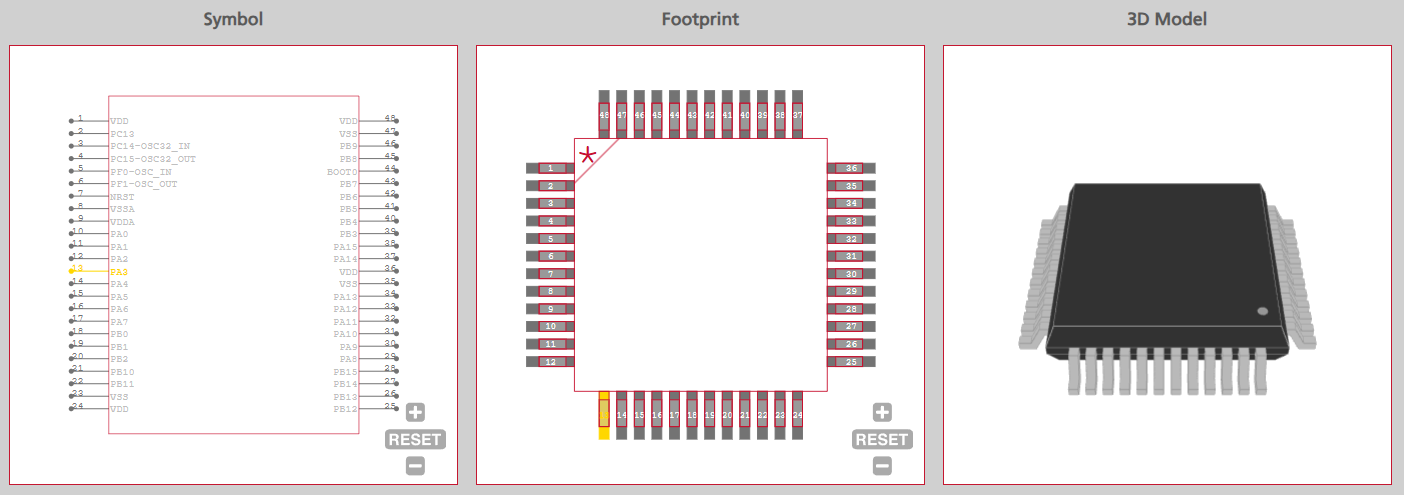
STMicroelectronics STM32F030C6T6's Pinouts
1. Power Supply Pins
| Pin Number |
Pin Name |
Description |
| 1, 16, 32, 48 |
VDD |
Digital power supply (2.4–3.6 V). Multiple pins for stable power distribution. |
| 12, 31, 63 |
VSS |
Digital ground. |
| 9 |
VDDA |
Analog power supply (2.4–3.6 V, must be ≥ VDD). |
| 8 |
VSSA |
Analog ground. |
2. Clock and Reset Pins
| Pin Number |
Pin Name |
Description |
| 5 |
PF0-OSC_IN |
External clock input (4–32 MHz crystal/ceramic resonator). |
| 6 |
PF1-OSC_OUT |
External clock output. |
| 3 |
PC14-OSC32_IN |
Low-speed external clock input (32.768 kHz for RTC). |
| 4 |
PC15-OSC32_OUT |
Low-speed external clock output. |
| 7 |
NRST |
Reset input (active low). Includes internal weak pull-up; external filter recommended (see Figure 22). |
3. GPIO Pins (General-Purpose Input/Output)
GPIOA (PA0–PA15)
| Pin Number |
Pin Name |
Alternate Functions (via GPIOA_AFR registers) |
| 10 |
PA0 |
ADC_IN0, USART1_CTS, USART2_CTS, USART4_TX, RTC_TAMP2, WKUP1 |
| 11 |
PA1 |
ADC_IN1, USART1_RTS, USART2_RTS, USART4_RX, EVENTOUT |
| 12 |
PA2 |
ADC_IN2, USART1_TX, USART2_TX, TIM15_CH1, WKUP4 |
| 13 |
PA3 |
ADC_IN3, USART1_RX, USART2_RX, TIM15_CH2 |
| 14 |
PA4 |
ADC_IN4, SPI1_NSS, USART1_CK, USART2_CK, TIM14_CH1, USART6_TX |
| 15 |
PA5 |
ADC_IN5, SPI1_SCK, USART6_RX |
| 16 |
PA6 |
ADC_IN6, SPI1_MISO, TIM3_CH1, TIM1_BKIN, TIM16_CH1, USART3_CTS |
| 17 |
PA7 |
ADC_IN7, SPI1_MOSI, TIM3_CH2, TIM1_CH1N, TIM14_CH1, TIM17_CH1 |
| 29 |
PA8 |
TIM1_CH1, USART1_CK, EVENTOUT, MCO (main clock output) |
| 30 |
PA9 |
TIM1_CH2, USART1_TX, I2C1_SCL, TIM15_BKIN |
| 31 |
PA10 |
TIM1_CH3, USART1_RX, I2C1_SDA, TIM17_BKIN |
| 32 |
PA11 |
TIM1_CH4, USART1_CTS, I2C2_SCL, EVENTOUT |
| 33 |
PA12 |
TIM1_ETR, USART1_RTS, I2C2_SDA, EVENTOUT |
| 34 |
PA13 |
SWDIO (Serial Wire Debug Data In), IR_OUT |
| 35 |
PA14 |
SWCLK (Serial Wire Debug Clock), USART1_TX, USART2_TX |
| 36 |
PA15 |
SPI1_NSS, USART1_RX, USART2_RX, USART4_RTS, EVENTOUT |
GPIOB (PB0–PB15)
| Pin Number |
Pin Name |
Alternate Functions (via GPIOB_AFR registers) |
| 18 |
PB0 |
ADC_IN8, TIM3_CH3, TIM1_CH2N, USART3_CK |
| 19 |
PB1 |
ADC_IN9, TIM3_CH4, TIM1_CH3N, USART3_RTS, TIM14_CH1 |
| 25 |
PB6 |
I2C1_SCL, USART1_TX, TIM16_CH1N |
| 26 |
PB7 |
I2C1_SDA, USART1_RX, TIM17_CH1N, USART4_CTS |
| 27 |
PB8 |
I2C1_SCL, TIM16_CH1 |
| 28 |
PB9 |
I2C1_SDA, IR_OUT, SPI2_NSS, TIM17_CH1, EVENTOUT |
| 21 |
PB10 |
I2C1_SCL, I2C2_SCL, USART3_TX, SPI2_SCK |
| 22 |
PB11 |
I2C1_SDA, I2C2_SDA, USART3_RX, EVENTOUT |
| 23 |
PB12 |
SPI1_NSS, SPI2_NSS, TIM1_BKIN, USART3_CK, TIM15_CH1 |
| 24 |
PB13 |
SPI1_SCK, SPI2_SCK, I2C2_SCL, TIM1_CH1N, USART3_CTS |
| 25 |
PB14 |
SPI1_MISO, SPI2_MISO, I2C2_SDA, TIM1_CH2N, TIM15_CH1, USART3_RTS |
| 26 |
PB15 |
SPI1_MOSI, SPI2_MOSI, TIM1_CH3N, TIM15_CH1N, TIM15_CH2, RTC_REFINT, WKUP7 |
GPIOC (PC0–PC15)
| Pin Number |
Pin Name |
Alternate Functions (via GPIOC_AFR registers) |
| 8 |
PC0 |
ADC_IN10, EVENTOUT, USART6_TX |
| 9 |
PC1 |
ADC_IN11, EVENTOUT, USART6_RX |
| 10 |
PC2 |
ADC_IN12, SPI2_MISO, EVENTOUT |
| 11 |
PC3 |
ADC_IN13, SPI2_MOSI, EVENTOUT |
| 24 |
PC4 |
ADC_IN14, EVENTOUT, USART3_TX |
| 25 |
PC5 |
ADC_IN15, USART3_RX, WKUP5 |
| 37 |
PC6 |
TIM3_CH1 |
| 38 |
PC7 |
TIM3_CH2 |
| 39 |
PC8 |
TIM3_CH3 |
| 40 |
PC9 |
TIM3_CH4 |
| 41 |
PC10 |
USART3_TX, USART4_TX |
| 42 |
PC11 |
USART3_RX, USART4_RX |
| 43 |
PC12 |
USART3_CK, USART4_CK, USART5_TX |
GPIOF (PF0–PF7)
| Pin Number |
Pin Name |
Alternate Functions (via GPIOF_AFR registers) |
| 5 |
PF0 |
OSC_IN, I2C1_SDA |
| 6 |
PF1 |
OSC_OUT, I2C1_SCL |
| 47 |
PF6 |
I2C1_SCL, I2C2_SCL |
| 48 |
PF7 |
I2C1_SDA, I2C2_SDA |
4. Communication Interfaces
| Interface |
Pins |
Description |
| USART1 |
PA9 (TX), PA10 (RX), PA8 (CK), PA11 (CTS), PA12 (RTS) |
Supports auto-baud rate detection; up to 6 Mbit/s. |
| I2C1 |
PB6 (SCL), PB7 (SDA), PF0 (SDA), PF1 (SCL) |
Fast Mode Plus (1 Mbit/s), SMBus/PMBus support. |
| SPI1 |
PA5 (SCK), PA6 (MISO), PA7 (MOSI), PA4 (NSS) |
Master/slave mode, up to 18 Mbit/s; 4–16-bit frames. |
| USART3 |
PB10 (TX), PB11 (RX), PB12 (CK), PB13 (CTS), PB14 (RTS) |
Multi-function UART for industrial control. |
5. Timers and ADC
| Peripheral |
Pins |
Description |
| ADC |
PA0–PA7, PC0–PC5, PB0–PB1
(10 external channels + 2 internal: temperature sensor, VREFINT) |
12-bit ADC, 1 µs conversion time; supports DMA. |
| TIM1 (Advanced Control Timer) |
PA8–PA11, PB13–PB15 |
16-bit timer with 6 PWM channels, dead-time control, and complementary outputs. |
| TIM3 (General Purpose Timer) |
PA6–PA7, PC6–PC9 |
16-bit timer with 4 channels for PWM, input capture, and quadrature encoder. |
6. Debug and Boot Pins
| Pin Number |
Pin Name |
Description |
| 34, 35 |
PA13 (SWDIO), PA14 (SWCLK) |
Serial Wire Debug (SWD) interface for programming and debugging. |
| 44 |
BOOT0 |
Boot mode selection (high: boot from System Memory; low: boot from Flash). |
7. Key Considerations
- 5V Tolerance: Pins marked as FT (e.g., PA0–PA15, PB0–PB15) are 5V tolerant, suitable for direct connection to 5V systems.
- Package Diagram: Refer to Figure 6 in the datasheet for the LQFP48 pinout layout (top view).
- Power Decoupling: Use ceramic capacitors (100 nF + 4.7 µF) close to VDD/VSS and VDDA/VSSA pins for stable power (Figure 13).
This pinout summary covers all functional categories, with references to the datasheet for detailed electrical characteristics and layout guidelines.
STMicroelectronics STM32F030C6T6's Category-Microcontrollers
Microcontrollers are the brain of embedded systems, integrating a CPU, memory, peripherals, and I/O interfaces into a single chip. They excel in real-time control, low-power operation, and cost-effectiveness, making them indispensable in applications ranging from consumer electronics and automotive systems to industrial automation and medical devices. These chips enable intelligent functionality by processing data locally, communicating with sensors/actuators, and executing pre-programmed tasks efficiently. Arm-based architectures, like the Cortex series, dominate the market for their balance of performance and energy efficiency, allowing microcontrollers to meet the demands of both simple and complex systems.
The versatility of microcontrollers lies in their configurable peripherals, such as timers, ADCs, and communication interfaces (UART, I²C, SPI), which simplify system design and reduce external component reliance. Low-power modes, including sleep, stop, and standby, extend battery life in portable devices, while robust safety features like watchdog timers enhance reliability in harsh environments.
STMicroelectronics STM32F030C6T6 exemplifies these strengths. Based on the Arm Cortex-M0 core, this 32-bit microcontroller offers 32 KB Flash, 8 KB SRAM, and a suite of peripherals, including a 12-bit ADC, advanced timers, and multiple communication interfaces. Its low-power design, with stop-mode currents as low as µA levels, suits battery-powered applications like smart sensors and portable medical devices. Packaged in a compact LQFP48 form factor, it balances performance (up to 48 MHz) and cost, making it ideal for entry-level industrial controls, home automation, and educational platforms. With 5V-tolerant GPIOs and robust EMC characteristics, the STM32F030C6T6 demonstrates ST’s commitment to delivering flexible, reliable microcontrollers that address diverse market needs.
STM32F030C6T6's Manufacturer-STMicroelectronics
STMicroelectronics (ST) has established itself as a global leader in the microcontroller (MCU) domain, renowned for its innovative and versatile STM32 family. Built on Arm Cortex cores, STM32 MCUs cater to a wide spectrum of applications, from low-power embedded systems to high-performance industrial controls. One of ST’s key achievements is democratizing 32-bit computing with affordable, feature-rich devices, driving the adoption of Arm architectures in mainstream markets. The STM32 lineup stands out for its scalability, offering variants with diverse memory sizes, peripherals, and power management features. For instance, the STM32 Low Power series sets benchmarks in energy efficiency, with modes like Stop and Standby reducing consumption to microampere levels, ideal for battery-powered IoT devices.
ST has also fostered a robust ecosystem around its MCUs, providing comprehensive development tools, middleware, and community support, which significantly lowers the entry barrier for developers. In industrial applications, STM32 MCUs are praised for their reliability and real-time performance, supporting advanced timers, CAN interfaces, and high-speed communication protocols. The company’s commitment to sustainability is evident in its ECOPACK® packages and compliance with environmental standards.
A notable example is the STM32F030C6T6, a member of the STM32 Value Line based on the Arm Cortex-M0 core. Designed for cost-sensitive projects, it offers 32 KB Flash, 8 KB SRAM, and a suite of peripherals including a 12-bit ADC, I2C, SPI, and USART interfaces. Its compact LQFP48 package and low-power modes make it suitable for smart home devices, portable medical instruments, and entry-level industrial sensors. By combining performance, efficiency, and affordability, ST continues to shape the MCU landscape, empowering developers to create innovative solutions across diverse industries.
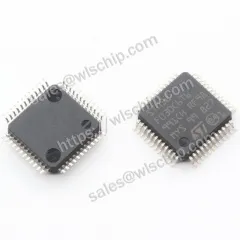
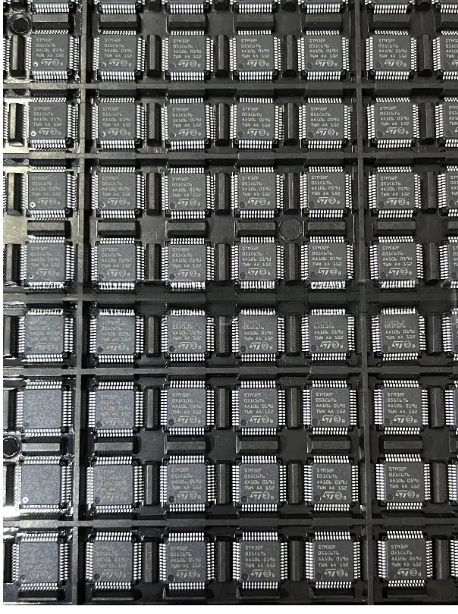
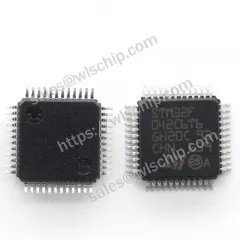
STM32F030C6T6 alternative parts: STM32F051C6T6, STM32F042C6T6
| Pictures |
 |
 |
 |
| Part Number |
STM32F030C6T6 +BOM |
STM32F051C6T6 +BOM |
STM32F042C6T6 +BOM |
| Manufacturer: |
STMicroelectronics |
STMicroelectronics |
STMicroelectronics |
| Description: |
MCU 32-bit STM32 ARM Cortex M0 RISC 32KB Flash 2.5V/3.3V 48-Pin LQFP Tray |
MCU 32-bit STM32F0 ARM Cortex M0 RISC 32KB Flash 2.5V/3.3V 48-Pin LQFP Tray |
IC MCU 32BIT 32KB FLASH 48LQFP |
| Lifecycle Status: |
ACTIVE (Last Updated: 7 months ago) |
ACTIVE (Last Updated: 6 months ago) |
ACTIVE (Last Updated: 7 months ago) |
| Factory Lead Time: |
10 Weeks |
10 Weeks |
10 Weeks |
| Contact Plating: |
Tin |
Tin |
- |
| Mounting Type: |
Surface Mount |
Surface Mount |
Surface Mount |
| Package / Case: |
48-LQFP |
48-LQFP |
48-LQFP |
| Surface Mount: |
YES |
YES |
- |
| Number of Pins: |
48 |
48 |
48 |
| Data Converters: |
A/D 12x12b |
A/D 13x12b; D/A 1x12b |
A/D 13x12b |
| Number of I/Os: |
39 |
39 |
38 |
| Watchdog Timers: |
Yes |
Yes |
Yes |
| Operating Temperature: |
-40°C~85°C TA |
-40°C~85°C TA |
-40°C~85°C TA |
| Packaging: |
Tray |
Tray |
Tray |
| Series: |
STM32F0 |
STM32F0 |
STM32F0 |
| Part Status: |
Active |
Active |
Active |
| Moisture Sensitivity Level (MSL): |
3 (168 Hours) |
3 (168 Hours) |
3 (168 Hours) |
| Number of Terminations: |
48 |
48 |
48 |
| Max Power Dissipation: |
364mW |
364mW |
364mW |
| Terminal Position: |
QUAD |
QUAD |
QUAD |
| Terminal Form: |
GULL WING |
GULL WING |
GULL WING |
| Supply Voltage: |
3.3V |
3.3V |
3.3V |
| Frequency: |
48MHz |
48MHz |
48MHz |
| Base Part Number: |
STM32F03 |
STM32F05 |
STM32F04 |
| Supply Voltage-Min (Vsup): |
2.4V |
2V |
2V |
| Interface: |
I2C, SPI, UART, USART |
HDMI, I2C, I2S, IrDA, LIN, SPI, UART, USART |
CAN, HDMI, I2C, I2S, IrDA, LIN, SPI, UART, USART, USB |
| Memory Size: |
32kB |
32kB |
32kB |
| Oscillator Type: |
Internal |
Internal |
Internal |
| RAM Size: |
4K x 8 |
8K x 8 |
6K x 8 |
| Voltage - Supply (Vcc/Vdd): |
2.4V~3.6V |
2V~3.6V |
1.65V~3.6V |
| uPs/uCs/Peripheral ICs Type: |
MICROCONTROLLER, RISC |
MICROCONTROLLER, RISC |
MICROCONTROLLER, RISC |
| Core Processor: |
ARM® Cortex®-M0 |
ARM® Cortex®-M0 |
ARM® Cortex®-M0 |
| Peripherals: |
DMA, POR, PWM, WDT |
DMA, I2S, POR, PWM, WDT |
DMA, I2S, POR, PWM, WDT |
| Program Memory Type: |
FLASH |
FLASH |
FLASH |
| Core Size: |
32-Bit |
32-Bit |
32-Bit |
| Program Memory Size: |
32KB 32K x 8 |
32KB 32K x 8 |
32KB 32K x 8 |
| Connectivity: |
I2C, SPI, UART/USART |
HDMI-CEC, I2C, IrDA, LINbus, SPI, UART/USART |
CANbus, HDMI-CEC, I2C, IrDA, LINbus, SPI, UART/USART, USB |
| Supply Current-Max: |
23.2mA |
23.2mA |
23.4mA |
| Bit Size: |
32 |
32 |
32 |
| Has ADC: |
YES |
YES |
YES |
| DMA Channels: |
YES |
YES |
YES |
| Data Bus Width: |
32b |
32b |
32b |
| Number of Timers/Counters: |
5 |
8 |
6 |
| Core Architecture: |
ARM |
ARM |
ARM |
| CPU Family: |
CORTEX-M0 |
CORTEX-M0 |
CORTEX-M0 |
| Number of ADC Channels: |
16 |
13 |
10 |
| Number of PWM Channels: |
6 |
- |
- |
| Number of I2C Channels: |
1 |
- |
- |
| Height: |
1.45mm |
1.45mm |
- |
| Length: |
7.2mm |
7.2mm |
7mm |
| Width: |
7.2mm |
7.2mm |
- |
| REACH SVHC: |
No SVHC |
No SVHC |
- |
| Radiation Hardening: |
No |
No |
No |
| RoHS Status: |
ROHS3 Compliant |
ROHS3 Compliant |
ROHS3 Compliant |
| Lead Free: |
Lead Free |
Lead Free |
Lead Free |
| JESD-609 Code: |
- |
e3 |
- |
| Peak Reflow Temperature (Cel): |
- |
260 |
- |
| Terminal Pitch: |
- |
0.5mm |
0.5mm |
| Time@Peak Reflow Temperature-Max (s): |
- |
30 |
- |
| Pin Count: |
- |
48 |
- |
| Supply Voltage-Max (Vsup): |
- |
3.6V |
- |
| Power Supplies: |
- |
2.5/3.3V |
2.5/3.3V |
| PWM Channels: |
- |
YES |
YES |
| Number of SPI Channels: |
- |
1 |
- |
| Mount: |
- |
- |
Surface Mount |
| Weight: |
- |
- |
181.692094mg |
| ECCN Code: |
- |
- |
3A991.A.2 |
| HTS Code: |
- |
- |
8542.31.00.01 |
| On Chip Program ROM Width: |
- |
- |
8 |
WlS Electronic holds a large inventory of STMicroelectronics STM32F030C6T6. We assure you that these are genuine and brand-new components, directly sourced from STMicroelectronics. If needed, we can provide quality test reports for the STM32F030C6T6.
To obtain a quotation, simply fill in the desired quantity, your contact name, and your email address in the quick quotation form on the right. Our sales representatives will get in touch with you within 12 hours. You can contact us online at any time, or send an email to: SALES@WLSCHIP.COM.